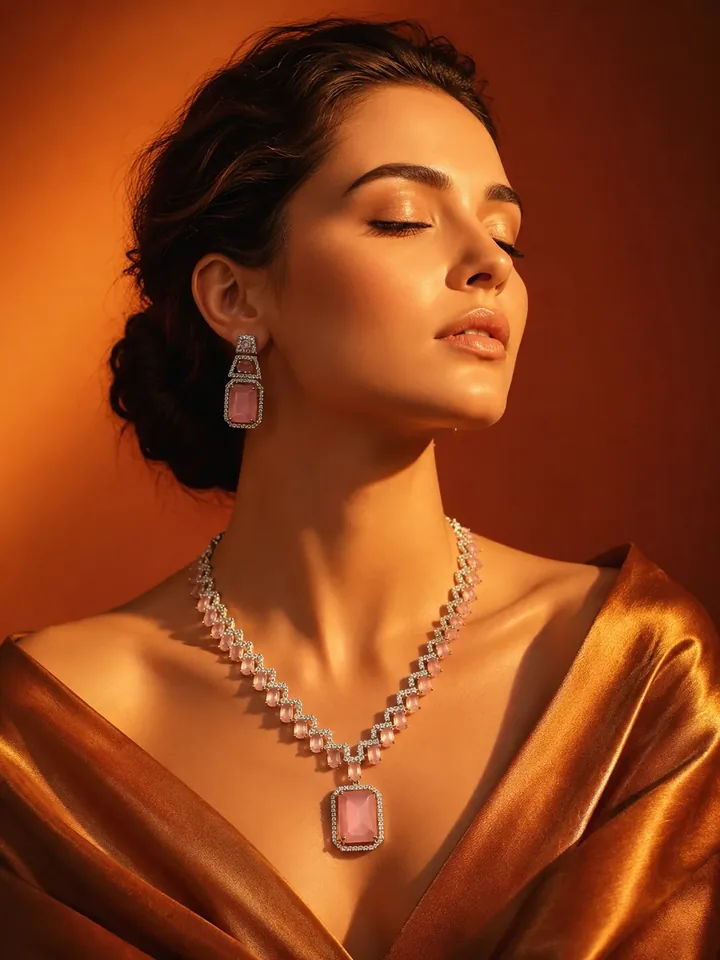
Necklace photography that shows drape and detail
What makes necklaces hard to photograph
- Tangles and kinks. Chains curl and cross. Straighten and pin them before shooting.
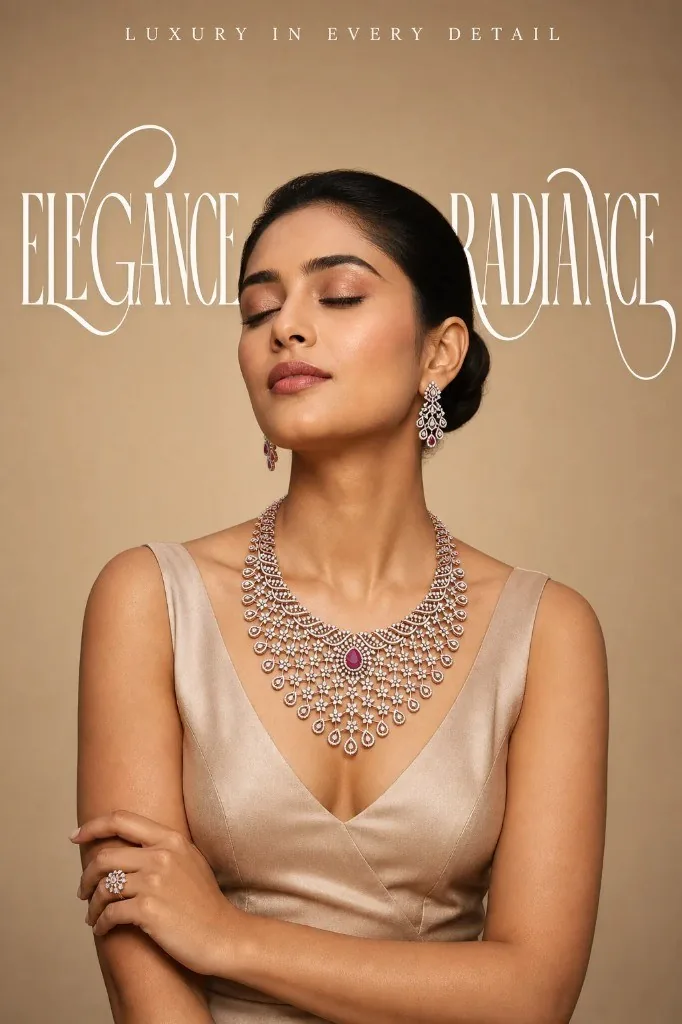
- Length and drape. Buyers want to know where it sits. A bust or on-model shot answers that.
- Many details. A statement necklace has dozens of stones, so you need both a full view and close-ups.
- Metal glare. Long chains reflect light unevenly. Soft light and fill cards smooth it out.
How to photograph necklaces: step by step
- Lay it on velvet or a neutral fabric and shape the curve with pins or tape behind the chain.
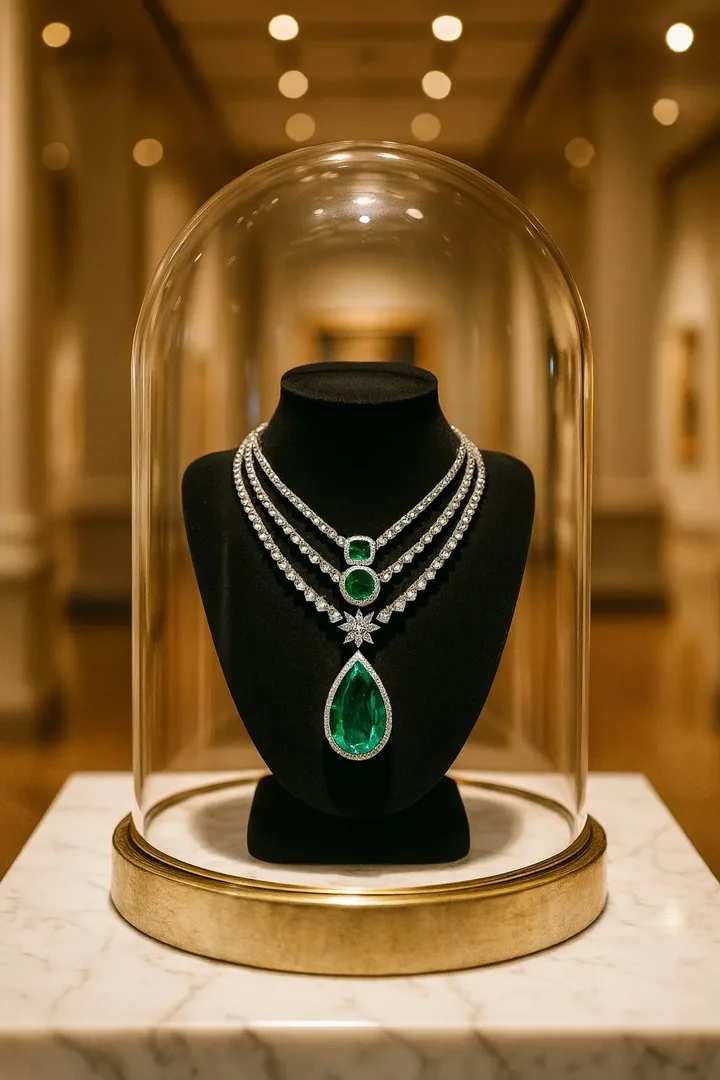
- For hanging shots, use a clear thread or a necklace stand.
- Photograph the clasp, the pendant and the full length separately.
- Shoot at 4:5 or 9:16 so the full necklace fits vertically.
- Add an on-neck or on-model image for scale and drape.
Best styles for necklaces
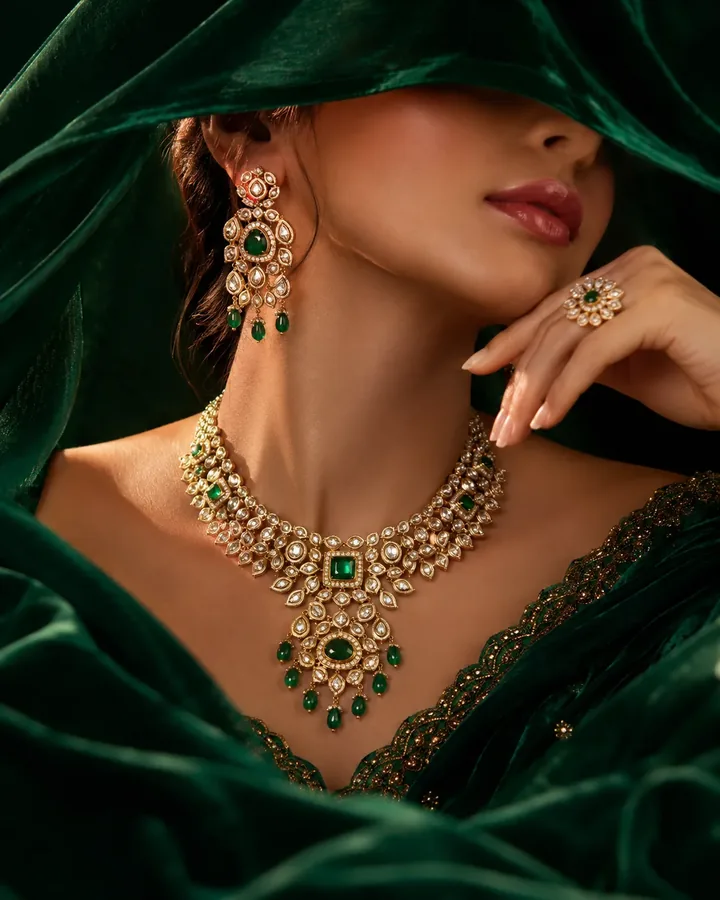
These looks suit necklaces well. Each is available in Jewellery Photoshoot and generated from your own photo:
Best image formats for necklaces
| Ratio | Best for |
|---|---|
| 4:5 | Instagram feed hero |
| 9:16 | Stories and Reels |
| 3:2 | Website banners and ads |
Need exact pixel sizes? Use the free photo size guide.
Create necklaces photos with Jewellery Photoshoot
Upload one clear phone photo and pick a style. In about 20 seconds you get studio, on-model and campaign images, in square, 4:5, 9:16 or 3:2. Your design is kept as photographed, and your first shoot is a free watermarked preview.
Necklaces photography FAQ
How do I photograph a necklace without a model?
Use a neck bust, a velvet display or a flat lay. Or use an AI on-model style that places your necklace on a generated model, then verify the length and detail.
How do I keep a chain from tangling in photos?
Straighten it before every shot and use pins, tape behind the chain or fishing line to hold the shape.
What format is best for necklace photos?
Vertical 4:5 or 9:16 suits necklaces because the full length and pendant fit naturally.